Sunday, July 31, 2011

If You Don't Wish Upon a Star...

I'm writing a book. One that will hopefully become an epic of sweeping, narrative power and  completely undermine the correlation some individuals make between teenagers and vampire lit (sweet Stephanie had such good intentions, but they turned into an entire Teen Literature Section at Barnes and Nobles HISSING at me.) The first few pages of this novel will be posted up on le blog, and more excerpts will be acomin' as the year progresses at my attaining more time to revise. So there's one more question, now, is there not?...
Q: WHAT IS YOUR GREAT AMERICAN NOVEL ABOUT, SPERANZA?  
A: [UOMO DI SPERANZA tries to be refined with his noise pointed in the air, but instead has an eager, puppy-dog-like mug.] Success and what forces may cause us to inhibit ourselves from attaining it. However, the twist comes with an unreliable narrator, one whose experiences are unforgettable in a quite bad manner indeed. Picture A Northern Light fraternizing with The Curious Incident of the Dog in the Night Time just before the two novels meet The Help for lunch. Descriptive enough for you?
           
***

Baldwin in an all-knowing pose. Can't you see the literary magic bursting
out of those fingers?
In the marvelous spirit of discussing success, today's post will concern an essay by the famed writer James Baldwin, an African American who wrote during much of the twentieth century. His writings aided the Civil Rights Movement and are now imperative aspects of the American Literary Canon. Baldwin composed an essay about his life entitled "Autobiographical Notes", which one can view right here, early on in his career. And my stalking begins-
             It was in his early life that James Baldwin fought in a rebellion, a revolution of sorts, which left no part of his body scathed. This revolution did not require any weapons since distinct peoples or countries were not involved, did not require travelling to any alien place. No, the revolution was one that, throughout Baldwin’s entire life, occurred only within the man’s self.
            From the onset of his life, James Baldwin was in rebellion against different phenomena in his world. He confesses to have “read just about everything [he] could get [his] hands on--except the Bible, probably because it was the only book [he] was encouraged to read.” This is an example of Baldwin resisting what his elders taught him about literature. His first published writing was a piece about the Spanish Revolution which, although accepted for publication there, was so “censored by the lady editor” of a church newspaper that young James was “outraged” (don't worry, little James, the author of this blog would probably have experienced the same reaction plus a day-long period of screaming!) The only action from which this censoring could possibly result was Baldwin composing a piece that resisted his church’s ideals.   
            James confessed in the piece that his path to becoming a writer within his adolescence and adulthood also included much resistance. This path began with “the most difficult (and most rewarding) thing in his life”-making “some kind of truce” with the fact that he was an African American. But in order to make that “truce”, Baldwin had to first realize that he was a “bastard of the west”, an individual identifiable with neither the “jungle” or “the stones of Paris”. As an African American, he was resisting complete relevance to singularly African or singularly European culture. Writing about his being a “negro”, a global mutt, was “the gate [he] had to unlock before writing about anything else.” But then why did he only forge a “truce” with his being an African American, and not fully embrace it? Well, James was simultaneously rebelling against identification as just an African American-James Baldwin was the James Baldwin, not exactly a European, not exactly an African, not even the certain mixture of them both that is an African American. It was in fact the James Baldwin who wrote this essay, not just an African American.
            When this journey into his writing prime was complete, Baldwin ended up with some prolific ideas about a writer’s life that included a theme of resistance. He states how “Any writer, I suppose, feels that the world into which he was born is nothing less than a conspiracy against the cultivation of his talent [and] it is only because the world looks on his talent with such a frightening indifference that the artist is compelled to make his talent important.” Therefore, the attitude of resistance within James Baldwin’s life has caused him to think that all writers should make themselves recognized by resisting the “world”, or the forces, that “look on his talent with…a frightening indifference.” Baldwin also believed that writers should “examine attitudes,…go beneath the surface,…[and] tap the source”,  for example establishing “between himself and…[social] affairs a great distance” so that the writer can take “a long look back.” The only reason why one would want to distance himself from social affairs and look into their past is if he desires to rebel against any belief of that past’s full discovery, the way to rebel being a discovery of new information. If new information is found about that past, then obviously a belief of everything about that past being previously discovered is false. This new information about that past in turn permits the writer to “look forward in a meaningful sense” so he can discover a new phenomenon about the present or future of social affairs, a new one that in turn rebels against any belief in full discovery of the present or future of social affairs. The aforementioned principle can also be used with any other phenomenon that a writer may be interested in, such as science or political affairs. James Baldwin, you little rebel…

Baldwin's Debut Novel
            But why did all of the efforts at rebellion here succeed in an excellent fashion? Baldwin went on to ultimately identify himself as the James Baldwin, defeat forces that oppressed his palpable writing talent, and discover new phenomena in the past, present, and future of social affairs with his classic writings that include Go Tell It On the Mountain.  Well, the answer is that intelligent Baldwin insured that he always knew exactly what he was rebelling against. In his childhood, he was rebelling against what his elders told him specifically in the area of literature. If he just rebelled against everything that his elders told him, he would have probably ended up a crackpot hobo living on some forgotten corner of Candy land. In his life as a writer, he specifically rebelled against the forces that treated his talent with indifference, not anyone else’s. If he concentrated on defeating the forces that treated someone else’s with indifference before concentrating on the defeat of those that treated his with indifference, then his path to success, his self-revolution full of so many resistances, would have probably occupied much more time.
            Now how wondrous would it be to study the Baldwin revolution rather than the American, eh? Or maybe the revolution of Brittany Spears? Miley Cyrus? That woman about to cross the street over there? Charlie Sheen, dare I say it? You? Yes, you-go ahead, because each person alive has all the internal strength he needs to make a robust army. Go ahead, and in the words of the wonderful Jack Dosson (HINT-HINT-WINK-WINK!), "make it count."
            That's all for now, folks. I'll be writing my daily 2,000 words and attempting to recover from an invigorating day at the beach, one where I was almost trampled by an army of lifeguards. In speedos. Yikes.

***CITATION ALERT!
This post used the following source:
"About the Author: James Baldwin." PBS: Public Broadcasting Service. PBS: Public Broadcasting   Service. Web. 31 July 2011.
<http://www.pbs.org/wnet/americanmasters/episodes/james-baldwin/about-the-author/59/>.

Saturday, July 16, 2011

The Post of Not-So-Sweet Revenge

There are only so many books in my reading history whose contents have been gruesome enough to inhibit my sleeping patterns. The Girl With the Dragon Tattoo by Stieg Larsson was one of them. Yet you probably have read this book before. You probably remember the novel's heroine, a ferocious Ms. Lisbeth Salander. You probably recall the novel's hero, "crusading" journalist Mikael Blomkvist, with whom my admiration lies for being so health-conscious at middle age-great job! But the phenomena that there is an excellent chance you remembered most was what horrible happenings our two heroes endured during both the time leading up to and their actual time on Hedeby, a Swedish island where the formerly prominent industrialist Henrik Vanger's niece, Harriet, disappeared over forty years ago. And the mystery is set....
     Now let me inquire something of you-if, per say, I was once again a child in the third grade. One of my little friends and I both possess a great, strawberry ice cream, one with actual slivers of strawberry all enveloped in a waffle cone. Sound appetizing? To me it does. That is why I am immensely melancholy when my appetite has consumed every last bit of that pleasurable ice cream. But then the fact comes to my eyes that ignorant amigo is still contently ingesting his ball of desert, licking every pink creek that runs down the side of his waffle cone. So what action do I perform in order to fulfill my brazen desire for that strawberry-hued gold? I suddenly extend an arm out, elbow my indolent friend aside, and catch the ice cream cone as he falls onto the concrete with a desperate scream.
    Can you guess what happens now?
    What is expected: the amigo looks up at my fine enjoyment of his ice cream cone and begins to utterly hate me for it. He then oh-so-classically shoves the ice cream into my now gaunt face. What's that called, kids? REVENGE: a human primal instinct that is ignited when we think that someone has given us an unfair dealing in this lifelong game of poker. It mostly occurs when a person feels threatened in some way because of a wrong done unto them, giving that person the need to commit a giving of equal or worse severity against whoever or whatever committed the original wrong. This is done so that the person will never feel so threatened again. Let's take a gander at how Mr. Larsson deals with the REVENGE issue in his first novel...
Rooney Mara as a perfect Lisbeth Salander
in the the Northern European version of
The Girl With the Dragon Tattoo.  
     Lisbeth Salander is raped by her legal guardian, Advokat Bjurman (it's so fun to spell Swedish names!), in his office. After this crime is committed, the Advokat explains to her that he will only give Lisbeth money from her own bank account (a traditional responsibility for guardians in Sweden) if she agrees to have sex with him every week that cash is needed for her expenses. More rape will occur upon her refusal. Lisbeth now feels threatened that she will have to experience such an atrocity from the Advokat once more, and it is because of this feeling that she decides to protect herself in her own fashion. How, you may ask? Well, Lisbeth refuses sex the following week only to receive a sadistic rape that includes getting an anal plug forced into her while helplessly chained to a bed. What Bjurman doesn't know on this occasion is Salander's secret taping of the the entire crime on a security camera. The next week, we see Lizbeth tasering Advokat Bjurman so that chaining him to his own bed will be easier. Lisbeth then draws the revenge mission to a stunning conclusion by tattooing the expletive phrase "I AM A SADISTIC PIG, A PERVERT, AND A RAPIST" over the front of his torso. And if he ever mentions this supreme act of revenge and/or tries to exercise any nature of control over her in the future, she says, then the video she so cunningly forged will find its way to most every newspaper in Sweden. Readers of Larsson's novel will later come to infer that Lisbeth had been a rape victim before the Bjurman incident, and it is all of her former experiences with sexual violence that inspire her to almost kill yet another sadist who desires to rape Blomkvist before ultimately killing the journalist. Since she is close to Blomkvist, Salander feels personally threatened when this criminal so ardently intends to hurt him...
     So you want to live a life without any acts of revenge committed against you? All you must do, my good friend, is never commit an act that makes someone feel threatened. Don't be the average politician.

Thursday, June 30, 2011

A Jubilant Slice of June!

As a wonderful introduction to summer, I thought that I would post a piece that reflects the lifestyle revived when this warm air and encompassing spirit of nature begin to reside within our lives once more. This specific slice is actually the beginning of a novel that I have after meticulous thought given up on. Or have I....?
  
PS: This site was under construction. Do you like how it looks now?

Tuesday, June 28, 2011

Zamperini on "The Edge of Glory"

Photograph Courtesy of Mother Monster
Several days ago, @ladygaga tweeted "The revolution is ours to fight for love, justice+equality. Rejoice NY, and propose. We did it!!!" with a link to the picture shown to the right. I truly reason that this is all I must say to acknowledge you of what this post will be about-everybody knows that Ms. Gaga is simply the queen of all things twitterful.
     Another thing that everybody knows is how there is a great sum of people in America who are not immensely thrilled about this bill, exclaiming in consternation that marriage is a sacred phenomenon between only a man and a woman. Some would be surprised to hear that I once thought this myself and was hesitant to support a bill for homosexual marriage. However, as with many, the course of my thoughts changed when I looked at the portrait in its entirety instead of just one square inch. Believe it or not, those same people who marched with signs of protest at NYC's rainbow parade are also the ones who caused the legislation to exist.
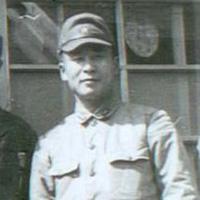
Mutsuhiro Watanabe
      Let's start with a simple fact-an individual's attitude about his surroundings and himself is in part forged by other people; these people can influence the nature of the individual's surroundings and, through their treatment of him, the individual's sense of self. Nothing shows this more than the adventures of Louis Zamperini at the Japanese POW camps Omori and Naoetsu (and yes, after pathetically reading the thing since March, I finally finished Unbroken). After travelling for over forty days on a disintegrating raft, Louie and his brave fellow, Russell Allen Phillips, have survived only to fall into enemy hands. The Japanese see mammoth stores of useful information in these ravaged Americans and therefore heavily interrogate them before Louie ventures to Omori and eventually Naoetsu. Phillips is eventually transported to several other POW camps where he endures a grueling existence a bit similar to Louie's. However, the unbearibility of Louie's imprisonment surpasses that of his fellow serviceman, for it is at Omori, a camp located just outside Tokyo, that a person who will almost totally make his life a living hell waits for the former Olympian. That person is the fit, ferocious, and mentally frazzled Mutsuhiro Watanabe. Malicious Mutsuhiro decides to make the personal breaking of Louis Zamperini his business, and he quite mercilessly carries out this business by randomly clubbing  Zamp as wel as assigning him horrid occupations such as working with pig fesces, just to name a few examples. Other guards don't help as they steal Red-Cross Rations intended for the POWs and maintain living quarters that are infested with pests. Overall, this causes Louie to think of his world  as one of the utmost desperation and hopelessness, one where Watanabe (nicknamed "The Bird" by POWs) haunts his every breath, one where the indifference to the American's needs makes him less than human. And that right there is all the proof necessitated. The fact that the Japanese guards refuse to maintain the camp to a livable condition causes the POWs to feel that their setting was one of absolute horror, while the fact that those same guards treated the POWs in a less-than-human manner causes those same POWs to feel that they are in fact less than human.
        Now, with no offense intended, picture the entire homosexual population as those POWs and all opposed to homosexuality the guards. The "guards" of this camp have forged an environment that is is not comfortable with the "prisoners" presence, therefore causing this environment to also view the prisoners as a population worthy of pity. The homosexuals therefore possess a desire that drives them to expunge their worthiness of pity since pity is a sign of inferiority and, of course, humans despise any nonsensical inferiority within themselves. Among the actions executed by the guards is also treating of homosexuals in an unfair manner, specifically by way of not permitting civil unions to hold the same features as marriages. The condition of homosexuals then becomes utterly personal since every "prisoner" living in the camp is affected. They each see themselves as a proud member of the homosexual population who is being discriminated against by a great number of individuals in society. And this is the pivotal reason why the piece of legislation was passed. Ponder over the phenomenon for a moment...would there really be a need for gay marriage rights if homosexual couples  freshly out of civil union possessed the same opportunities (such as a legal kinship between you and your spouse that is recognized nationwide-civil union legislation is state-specific) had the same rights that newlyweds did? That there is the reason why I began to support the gay-marriage bill. 
     Included within Louie's abhorrent adventures in Japan are some guards that are in fact kind to the POWs, some who simply refuse to reach the level of cruelty that their fellows fulfill. The kind guards in my metaphor are those who are not large fans of homosexuality, or even just gay marriage, but do not contribute to the population's formation of a negative environment and sense of self. And they are probably the most numerous population of all.

Thursday, June 16, 2011

Finals, Hurrah!

So in light of the fact that these wonderful examinations have been occupying most every teenage life recently, I thought that I would post almost a commentary on the American education system. Unlike a good amount of teenagers (and apparently some adults as well), I do believe that school is imperative and that it should absolutely exist, but that does not cause one centimeter of my mind to belief in the phenomenon's perfection. Venture on into the following depths of literature only if you dare...
           I had always wondered why mature congressmen acted like fervent Kardashians on that hallmark night. One side of the room clapping immediately caused the other to remain astutely in their seats and stare at their opponents with distasteful smirks. The night when I saw this precedent proved utterly wrong was also a night plagued by hours of studying; my wonderful science teacher refused to actually teach that week, so I was left to apprehend the material independently. Yet this studying was put on hold when George Stephanopoulos, studious and grinning as ever, appeared on our television to begin the night’s political festivities. It was my civic duty to know what was occurring throughout the United States, so I took a seat on the couch as Mr. Obama spoke. A few immensely hallmark points were stated, some of which spawned mostly positive responses from both parties in the politically-mixed audience…and then came a circus.
With "Innovation", he's the man with the magic touch
            “The first step to winning the future is encouraging American innovation.”
            Pandemonium. Ecstatic applause. Smiles on the faces of individuals across the spectrum-left, right, and somewhere in between. The two nations within America united for at least one moment before breaking into civil war again the proceeding day.
Yes, it is absolutely an excellent idea and all that jazz…but the real question is how we put this notion into action. Obama’s plan included encouraging the nation to “reward good teachers and stop making excuses for bad ones”, establishing the “Race to the Top” program to encourage independent reforms within schools, and implementing a new “tuition tax credit” to help more students attain higher education. Yet the president’s focus here is improving the means for an exhausted education system, not changing how students are actually educated. That, in my opinion, is the true key to igniting American innovation. And we can improve the methods by which students are taught through the integration of one simple word into our education system -“discussion.”
Discussion can be used as a learning tool anywhere
from preschool to summer camp..
            Instead of teachers simply telling students that concepts are unquestionably true, students should actually discover that the validity of these concepts by way of talking about them with other classmates. Science tells us that only 10% of our mind’s knowledge is learned in a conscious manner- by way of reading, writing, watching videos, others repeating concepts to us, or us repeating concepts to ourselves. These techniques that contribute to conscious learning are utilized in most schools nationwide. Chances are, my mind will not ultimately retain those biology facts that I verbally drilled into my head. The other 90% of knowledge  is taught to us unconsciously-through any interaction with others or sensual interaction with the world around us. One of my kindergarten science experiments included leaving a cup of apple juice near a window to see if it would eventually disappear.  The fact that some apple juice indeed disappeared acted as proof of evaporation in my mind, and I still belief in evaporation to this day. My remembering of the actual experiment shows just how pungent the action of proving concepts true (or “interactive learning”) is in the human mind. However, students need to see proof of the concepts they are taught in more classes then science if they are to better remember these concepts and readily apply them in adulthood. The way to accomplish this is discussion. One person bringing up a real situation that disproves a concept spurs on other students in the classroom to verbally discern how the concept actually is present in the suggested incident. All students in the classroom can also try to ultimately prove the concept wrong. In the latter case, the teacher would have students complete an interactive project that proves the invalidity of the concept, a project that would be later entered in some sort of contest so that students gain a sense of pride in their work. Both of these scenarios require sufficient knowledge of those concepts that would normally be present on today’s examinations; students would either understand the concepts enough to prove them wrong, or possess the memory of how they were proved right in a session of interactive learning. Additionally, all of the aforementioned discussions require a questioning spirit that is simultaneously needed for innovation to transpire. Are you hearing this, Mr. Obama?
            Now, I am aware that those students who are immensely quiet in school could gain absolutely nothing from the reformed education system. This population can be separated into two parties based on one principle: if fear or complete indifference to educational matters is the cause of their muteness. The first group can be easily dealt with by a reformed grading system. Instead of assessing what students know through examinations, teachers would discover the extent of their knowledge by seeing if the students use that knowledge in class discussions. Homework would exist for the sole purpose of introducing students to the concepts that will be used in class, but its completion would not heavily contribute to the student’s final grade. This is because the completion of homework would be a mandatory prerequisite to participate in class discussion each day, and since teachers grade students based on their participation in class discussions, incomplete homework would still contribute to a failing grade. Quiet students that care about school would ultimately be forced to “come out of their shells” and therefore become much better equipped for life in the real world.
Quiet slackers, on the other hand, would be sent to an alternative school in which they learn required material in astonishing depth at the hands of private tutors. Each student would spend the entire school day with a tutor who does not permit him to speak, question, or abstractly interact with the information. The required content would just be presented and explained to each slacker by adults with the emotional ranges of machinery.  A quiz on the content covered the day before would be given at the beginning of each educational session, and the school day would only end when the student has both received a perfect score on his quiz and learned all concepts scheduled for that particular day. Monthly finals that test the content students learned throughout all prior months of school would be given too.  The school year for each respective student would be however long it takes for that student to receive perfect scores on both his monthly finals and a cumulative examination. The aforementioned method of teaching would, of course, render the alternative students unable to remember the concepts and facts necessary for success in the real world. Spawning from this inability would be the same decreased amount of overall success these students would attain as a result of the modern education system. Enthusiasm will always be the keys to the kingdom of achievement.  To embed this ideal into their minds, all of these alternative students would be forced to spend one week every other month in the regular schools so that any progress they make can be rewarded. If a student performs well and applies himself to regular classes, he would be permitted to participate in the customary schooling system; all others who still slack would return to the uncreative hell. The horrors of the alternative schooling system would additionally encourage slackers to apply themselves so that they can participate in regular schooling, a much more enjoyable option.
Students enrolled in regular schools would also not be permitted to participate in the alternative education system since being interactively educated is most advantageous to them. I know of many extremely gifted individuals who do not perform to their highest capabilities because of sheer laziness-I was on the bus once and heard a fellow of mine explaining how he was “really smart, but just [didn’t] care.” In this system, all who can succeed would be forced to do so, making the combined potential of American peoples as a whole be realized. They would have no have a choice to but to “care”, and educational powerhouses worldwide would fall at the hands of pure, American drive.  Jobs in education would also be preserved since private tutors in alternative school and discussion-moderators in regular schools create an exorbitant amount of available positions. .
Much government funding is palpably necessitated to make the reformed education system work, but Washington will simply have to grow a pair and deal with it if they desire so much “innovation”. My World History teacher has told me how Florence, Italy was one of the most artistically active cities of the Renaissance. Why was this the case, you might ask? The fact that the house of Medici, Florence’s ruling family, affluently supported excellent artists such as Michelangelo did not hurt.  Fareed Zakaria says that “the fastest-growing economies are all busy using government policies to establish commanding leads in one industry after another.” Well, education is an industry that constructs the American future.

*NOTE The following sources were used for this essay:
 
Obama, Barack H. "2011 State of the Union Address." Speech. 2011 State of the Union Address. 1600 Pennsylvania Avenue NW Washington, DC 20500, Washington, DC. 16 June 2011. Huffpost Politics. The Huffington Post, 25 Jan. 2011. Web. 15 June 2011.
 
Stephanie. "THE MEDICI FAMILY." Yukon Education Student Network. Yukon Education Student Network. Web. 16 June 2011. http://www.yesnet.yk.ca/schools/projects/renaissance/medici.html.
 
Zakaria, Fareed. "Innovate Better." TIME 13 June 2011: 30-32. Print.