Showing posts with label Fiction. Show all posts

Friday, July 12, 2013

Why I Won't Be Depressed

See Goodreads page here.
See Shelfari page here.
I've recently been playing my oboe in a pit orchestra for the Gilbert and Sullivan operetta  Ruddigore, an experience I've enjoyed although the show's plot line could have been conceived by the Honey Boo Boo Child. Anyone who plays in the pit orchestra of any operetta can tell you that there is a lot of waiting involved in the experience, what with you having to sit and twiddle your thumbs while dialogue between songs plays out. The bassoonist and I as a result used this down-time to read Ned Vizzini's It's Kind of a Funny Story. I'm very proud to say that this book almost made me break out the paper shredder.
     I'll make this frank, to the point--I was semi-depressed a few years ago. I'd loved childhood with a passion, so much so that I confronted all of my anxiety about leaving childhood with feeling terrible anxiety about entering adulthood. Does this make sense? Of course it doesn't, and that's what made this period of my life so frustrating. What it basically boiled down to was me worrying that I would end up being a pot-dealer, or a thief, or a murderer, or a child-molester--something so horrible that simultaneous thoughts both of me committing these crimes and my family's reactions to me committing these crimes were almost unbearable. To make the situation worse, I didn't identify with other middle-schoolers very well, which made two consecutive summers maddening deserts of social activity, social activity that could have distracted me from what what my mother--my impromptu therapist--called "bad thoughts". My summer days were spent in front of a computer, wasting time with slightly humorous websites and such, while nights were spent watching crappy sitcom after crappy sitcom on the television. 
     It was horrible. 
     Craig's life in Funny Story is hands-down much more horrible than mine was. He's not doing well in his excessively-demanding classes, he's upchucking everything that's able to sneak its way down his unwelcoming throat, and it's not getting better. He's letting all of his thoughts interfere with those things in life that he loves. This is something I'm very glad never occurred to me since what I loved most at the time-- school--distracted me well from September through June; my semi-depression wasn't like the deep cloak of darkness that's falling over Craig.
     But then that makes me think, because an element of that anxiety still lives inside of me like a scar (I'm a fervent believer in the fact that mental scars can exist just as much as physical ones). I think that maybe, if I get into the Ivy League schools I so intensely want to attend, I will become depressed. That the demanding classes will be too much for me as the classes at his gifted high school were too much for Craig, and some form of those "bad thoughts" will return to me, causing a complete destruction of potential self-sustainability in my life. Heck, what if it moves in right now, what if I become so bent on destroying myself with my own mind that I actually destroy myself--just randomly, out of nowhere, as nonsensically as the thoughts themselves are constructed. There's just this fear inside of me that I can't seem to eradicate. 
     What if I turn up like Craig, ready to jump off the Brooklyn Bridge?
     But then I think some more, and realize two important things. One of them is that I'm a highly ambitious person, and therefore simply have to face the facts that if I dedicate all that time to depression, I'm not dedicating it to improving my literary or academic skills. I will fall behind, and even if I do waste time in my life, do I really want that time to be wasted in depression? The second, more potent phenomenon is the scar theory--I have to always expect that this semi-depression will be with me since those middle-school years were so much of a funk compared to the rest of my life. And whenever I feel the scar, I'll just have to remember what Craig realized about how in life: that you must accumulate as many verbs as possible, that you should always be thinking less than you're doing
     After all, your legacy is not just the things you've thought, but the thoughts you end up doing. 

Sunday, June 23, 2013

Think Like an Intersexual

Middlesex
To see the Goodreads page, click here.
To see the Shelfari page, click here.
Let me be the first the tell you that in the year 2013, junior year is a mess. Every single test you take feels like someone's way of saying "You're not good enough to do this" or "You're not good enough to do that"--it's like a perpetual episode of American Idol. Only on this season, you're not cut. You just keep doing every one of the stupidly-themed "weeks" kicking and screaming and wanting to go home, like a perpetual daycare. American-idol-themed day care, anyone?
     But it's a mess in another way as well--a mess of perspectives. Young people are trying to find out what it is to be man and what it is to be woman, leaving all concepts of what it is to be human on the sidelines. I've done a lot of thinking about this subject, as it's definitely been having an effect on my friends and I, and I've come to a simple conclusion that will hopefully solve all of the he-said-she-said, my-boyfriend-doesn't-like-me, dude-let's-fight, you-have-that-bra-size-? problems of the world:
     Everyone has to think like an intersexual.
     In Middlesex by Jeffery Eugenides, we are introduced to Cal Stephanides, who writes this book from the present day reflecting on his childhood. But he doesn't just talk about his childhood--Cal delves through the generations all the way back to his grandparents, who lived in a small, Greek village called Bithynios. Everything's quite normal in the story until brother and sister Lefty and Desdemona discover their exuberant love for each other and make themselves Cal's grandparents. This is the modern beginning of one mutation in the family's genome that leads to Cal's intersexuality. Nearer to the end of this book, Cal records how this intersexuality influenced his childhood, how it made him capable of seeing things from the male and female perspectives. Such a talent really helps when it comes to traditional teenage processes such as (almost) losing one's virginity--through all the feminine excitement (which he experienced because he was raised as a female), Cal can easily identify the small steps his lover is taking to seduce him, things that a heterosexual female may not take note of.
     It is with this kind of dual vantage-point that my friends and I should really be looking at our lives. When we try to look at life from the sole vantage point of a man or the sole vantage point of a woman, we just end up decreasing the amount of phenomena we expose ourselves to, beneficial phenomena that can easily be incorporated into ourselves. And naturally, a world where everyone analyzes everything from multiple perspectives can have great peace-making potential among individuals, whether that peace-making potential has to do with sewing teenage relationships back together (how many boyfriends and girlfriends swear never to talk to each other again because they just can't see from each other's perspectives?) or battling racism (illegal immigrants don't seem so evil when one considers his reaction to some of their situations.)
     Hate does not have to be combated with willingness to love, but simply a willingness to understand.
   

Sunday, March 3, 2013

To Be Young

Looking for Alaska
Check out the Goodreads page here.
Youth is fleeting.
     Let that be the one thing I've learned in these past few months. Looking for Alaska by John Green has taught me the confusion of youth, how we teenagers really don't have a clue about anything. The reason why we appear so clueless, as I have since reasoned, is that we think that there is more to this world than our own feelings. We adolescents think that there is some kind of constant in human existence that puts our own feelings to shame, whose sheer might and  all-knowingness can show us how nonsensical our feelings really are in comparison to the entire world.
    So what do we do? We are young, we are determined in our youth, and we are determined in our ability to take advantage of our youth, so we try and chase after this constant. We try to chase after that universal truth. We chase after it by trying to experience as many different areas of life as possible--whether drugs, relationships, or simply secluded places in our hometown. Our common reasoning for such exploration is that something, somewhere will teach us this truth, will tell us how nonsensical and petty our feelings are in retrospect. Because what teenager wants his emotions to be the only things composing his world? Adolescent emotions are as passionate and fickle as your fat uncle's eating preferences at an all-night dinner buffet, so such a world would be quite the mess indeed. Some will of course object to my thoughts with examples of adolescents acting like they are always in the right, like they know more than every adult on Earth combined. We've all seen or been that stubborn, thick-headed teenager at times, haven't we?
     What the adolescent breed is trying to accomplish with such hardheadedness is even more exploration of the constant mentioned above; by being so stubborn, adolescents are testing whether the constant lies in accepting their own opinions as God-given law. We're bombarded with enough stubborn figures being successful and enlightened--Rosa Parks, Martin Luther King, Rudy Giuliani,  Gandhi, even Teddy Roosevelt--that we can't help but investigate. The realization soon comes, however, that our brains don't harbor enough maturity to lead such enlightened lives, and we continue to act so stubbornly because of our bitterness concerning this fact.
     Eventually, the truth comes to us: that human feeling is all that defines tour world. There is nothing greater, nothing less, and no hope for anything greater either. The problem is that after this revelation, we stop experiencing everything, we stop searching for that truth, we accept that our emotions are all that can ever be, and we become adults.  
      

Sunday, November 25, 2012

The American Dream (Sucks)

The Amazing Adventures of Kavalier & Clay
See the Goodreads page here!
See Shelfari page here!
I've spent a good sixteen years on this Earth. On a count of my downright pitiful social life (insert sad violin solo), I've listened to a few political speeches in this time--but only when I'm really bored, because politics honestly don't interest me much. However, even with this very limited exposure, I've found the repetition of one thing in these speeches to be so repetitive, it's gag-worthy. What is that thing, you ask?
     "The American Dream"
     One could quite possibly play a drinking game centered around every time a politician refers to this wistful, wonderful thing that nobody really knows the definition of. I'm going to stop the war in wherever to preserve the American Dream (take a shot!). I'm going to increase tax cuts on the rich to preserve the American Dream (take a shot!). I'm going to build a moat around the White House to preserve the American Dream (take a shot!). I'm going to wax my eyebrows more frequently to preserve the American Dream (take a shot!). You catch  my drift.
     There's obviously something wrong here. There is also something wrong in Michael Chabon's breathtaking classic The Amazing Adventures of Kavalier & Clay: from young Czechoslovakian Joe Kavalier not facing the psychological damage wrought by his Jewish family being right in the clutch of Adolf Hitler and eventually becoming a recluse to George Deasy dreaming about becoming a Great American Novelist but stuck in the dregs of American Pulp Fiction to young homosexual Sammy Clay not following his true love, Tracy Bacon, to a permanent settlement in Los Angeles and eventually marrying Joe's ex-girlfriend...things are pretty screwed up, alright. 
     I define the American Dream as what people basically saw as the American way of life in the early twentieth century--a husband with a steady, well-paying day job working for the ever-antagonized "'boss", a wife whom most tasks of home-making and child-rearing fall upon (maybe juggling a job in there, too), and two children. Said two children can include boys who want to be professional baseball players from an early age but sooner or later turn into their fathers, or girls who want to be princesses from an early age but sooner or later turn into their mothers. So if it were in the hands of our deepest, most child-like desires, America would be millions of baseball-player-and-princess couples. Oh right, and there's something about freedom and equality and religion and that guy on the Quaker Oatmeal box in there too. Yeah. That's the image which has been thrown on me since a very early age, and no, I'm sure not everybody thinks that way. The way I've learned to see it, this is the age when everyone's having eternal small-talk about how their families are as different from that American Dream as possible. However, just like the Caucasian who knows that it's wrong but can't help giving a second glance to a young African American walking down his sidewalk, I think I share this personal image of the Dream with most people (including many of those having the aforementioned small-talk), that most people and I in our dirty, prejudiced heart of hearts think that this perfectly unrealistic American Dream is what our country should be composed of.
    And since this image rings true within a great deal of us, we let it limit our productivity and futures. In the 1940s, when this perfect Dream was what people openly thought America should be composed of, Joe Kavalier all but closes the door on his Czechoslovakian family because he is sucked into pursuing the American Dream--he is attempting to attain a well-paying job at Empire Comics as well as pursuing a potential wife, Rosa Saks. He even tries to use the whole freedom and equality thing to attain safe passage for his younger brother, Thomas, into the United States on a charitably-funded chip named The Ark of Miriam. However, classic features of the American Dream--glaring, staggering, belief in its own righteousness and perfection--is what coerces America to enter the war (how can we let Pearl Harbor, a place where people pursued the American Dream in all its righteousness and perfection, fall without retaliation afterwards, retaliation to prove how horrible it is for one to destroy something so righteous and perfect?), and what therefore coerces German submarines to sink American ships like The Ark of Miriam.
     George Deasy wants to be that Great American Novelist, but it is that pursuing of that well-paying day job working for that "boss" which causes him to toil at Empire Comics nevertheless.
     Sammy Clay loves Tracy Bacon with all his heart, and Tracy Bacon loves Sammy Clay with all his heart, but Sammy does not pursue a life with Tracy because of reasons which all stem from America not accepting their relationship--one of the most central tenants of the American Dream is a marital connection between man and woman on which the "perfect" family is based. In pursuit of this Dream, Sammy marries Joe's ex-girlfriend once Joe, driven mad by the death of his brother on the Ark of Miriam, joins the army and cuts all correspondence with his family in the States.
      So here's one of many things which I want to say to politicians: the American Dream is not something to wave around at the American people like a piece of chicken fried steak from the Cracker Barrel. It's not something that will help Americans--actually, it's very much like the kinds of pressures which cause self-conscious teenagers to commit suicide. And the last thing we need is an America rendered suicidal from not believing it's good enough to be America. 

Tuesday, November 6, 2012

We're All Terminal Cases, Bucko

The World According to Garp
This book's Goodreads page.
This book's Shelfari page.
Let's face it--if I wrote a book about happy people living their lives in happiness and loving one another so much and getting married and kissing and aww! and cute!, not a freaking person would read it. The novel would make no appearances on any bestseller list. I would not be conducting any cross-country book tours. And this is because if there's no problem in a book, there's no reason to keep reading--the characters are the same people from cover to cover, and hell no are we the same people from birth until death.
     The World According To Garp by John Irving illustrates the many adventures and misadventures of T.S. Garp, who flagrant feminist Jenny Field conceived by arguably raping a mentally deficient World War II veteran. It is with this onset that Irving's recurring theme is introduced: that, to put it frankly, my dear, life sucks. Garp endures being shot down by his crush, assisting Jenny in a quest to interview prostitutes, dealing with the at times psychopathic feminist cults his mother lends a helping hand to, having his son die indirectly because Garp's wife cheated with a college student, writing books with lackluster popularity, and (spoiler alert!) dealing with the eventual assassination of his mother. As I was reading, The World According To Garp almost seemed to be a list of all negative experiences an everyman endured as narrated by a sarcastic asshole (Irving does have a taste for the satirical). The aforementioned alone would be enough to place the book in the high regards of the literary world, but the next step Irving takes truly makes this author deserve his literary-heavyweight status; what Irving does is, through a mixture of being sarcastic as well as illustrating defining moments in Garp's life as results of those moments which "sucked", teach us that these suckish parts of our existence are those which qualify our lives as parts of reality.
     Think about it in terms of a novel again--if your life was a book, would you buy this book if it only contained happiness, contained no heartache, no fracture in the grand scheme of perfection? I know I wouldn't. One reason why we love books is that they offer alternate realities. And although this reality is alternate, that does not mean this reality is not reality--reality demands that things change, that people change, and alternate realities therefore demand the same. And, as Irving shows us, defining moments in our lives--which usually contribute to changes in our personas--are results of those times when you just want to hunker down and spend the rest of your days with Cherry Garcia ice cream and a season collection of "Here Comes Honey Boo Boo."
     Forgive me for going all Dr. Phil on you now, but listen--I know life can suck. I know the ice cream carton and that gay pig named Sparkles (one of many significant cultural contributions the Honey Boo Boo Child has given America) call to you frequently. But understand that it is our hardships which make defining moments in our lives, therefore allowing us to change as people, therefore allowing us to be parts of reality. And even though reality includes so many negatives, are there not enough positives to at least partly compensate? Even if an extended family member commits suicide, a situation I have recently undergone, isn't there a positive in the amount to which this tragedy can teach people how to have sympathy, can bring people closer together?
     Hell to the yeah.

Friday, July 20, 2012

Dominicans, Scots, and Hipsters

Greetings from the midst of Writerdom, an elite kingdom stationed in between the steep hills of Finalstan and the perilous mountains of JuniorYearia. The weather in this wonderful place is, well, hot, and the neatness of my room isn't so desirable either, so in all truth, my words are becoming the only positive phenomenon about this summer. As it should be, I guess, because I am a writer! Anyways, I hope all of you fine people are having a great time party-hardying with amusement parks and aquatic sports and lawn mowing, and I do hope you have gone to the movies as well. Why, one may ask? Well, I think it is the foremost duty of each and every American to have experienced


Delightfully dramatic, is it not?
     Brave tells the story of medieval Scottish princess Merida, whose adventurous ways are very contrary to the usual habits of a princess. Merida's favorite activities include horseback riding and archery, two activities that are not typical of the typical princess. Actually, they are so contrary to the precedent--the precedent oh-so-annoyingly pressed by Merida's mother--that our main gal starts to want a life away from royalty. Or another drastic change, such as a magical altering of her mother's positive opinion on Merida's wedding (watch the movie to find out how that one works out for her.) 
     We see yet another individual acting against the precedent in

     Not as dramatic, huh? Oh, well...
     Anyway, we see Oscar going against the grain in that while his other male, Dominican counterparts spend most of their time banging girls and talking about banging girls, Oscar is completely dedicated to his life as a writer of Science Fiction. Yes, he wants to bang some girls himself, but he (usually) doesn't let this desire get in the way of his career as a writer. Such a situation makes the young man experience suicide attempts, abductions, and the worsening of his formidable eating disorder. Tough stuff.
     We see yet another example of an individual (supposedly) acting against the precedent in


Yes, I know it's Darren Criss. That's not the point. The point is, in the words of an NYC Fashion Snob, look what he's wearing!
     It's the pure definition of hipster.
     In case you've been living under the Arctic Ocean for the past three years, a hipster is a man or woman who has a distinct hatred for everything "mainstream," what young people are, according to precedents, supposed to like. The precedent is that young people adore any culture that is distinctive to their epoch of entertainment history. Therefore, mainstream music includes Nicki Minaj, mainstream movies Twilight, mainstream books Twilight, and mainstream clothes anything that's not plaid. Their entire dogma is that to live a life in counterculture, to go against the grain, to violate precedents, in itself makes one's life worthwhile. Said dogma encourages the enjoyment of culture that either is not from their epoch in entertainment history or resembles culture from another epoch in entertainment history. However, what I detest about hipsters is that they do not--or most of them do not--act against the precedent for any certain reason. Merida, for example, does not want to be betrothed because it will obligate her to stop being such an outdoorsy type of individual; there would be no more riding horses and archery for hours on end. Oscar goes against precedent because he loves to write so much, and spending more time writing than banging women is a life that he prefers most of the time.
     However, I have found that most hipsters don't even attempt to enjoy anything that has been embraced by pop culture. A single phenomenon that the hipster feels too many people are liking is condemned as unlikable in his mind, which is absolute bogus because, as your mother told you in childhood, one can't know that he doesn't like something if he doesn't try it. Even though I usually prefer music that is not appreciated by pop culture, I have attempted and eventually enjoyed listening to artists like Lady GaGa and Adele.
     And the best part about the Hipster Movement to me is that, as months go on, more and more people are identifying themselves as hipsters. Hipsters are in fact....*gasp* becoming mainstream! But will the thousands of people who have adopted those signature glasses and plaid clothes stop being what is now themselves?

Monday, June 11, 2012

On Our Dignified Doorstep


I found a very intriguing newspaper article the other day, one penned by a woman named Deidra Parish Williams. This is what happened afterwards. 
* * *
To Kill a Mockingbird
This book's Goodreads page
This book's Shelfari page. 
In the United States, there is a wondrous system of pushing our own shit into somebody else’s face to tell ourselves we don’t have it anymore. This phenomenon is seen on a grand scale as societal norms are used to preserve one’s own dignity by crushing that of another, to emphasize that one is superior, whether through use of racism or general bullying. Authors Harper Lee, William Blake, and Deidra Parish Williams have meditated on the aforementioned with their respective pieces, To Kill a Mockingbird, “The Human Abstract,” and “Turn the Target on Entrenched Racism.”
            The horrors of racism in American history are filled with friction between societal norms, racism that both To Kill a Mockingbird and “Turn the Target on Entrenched Racism” directly express.  The white, American population has historically preserved its sense of superiority by asserting that its societal norm is better than that of the African Americans. In To Kill a Mockingbird, child Scout Finch is continuously faced with this conflict, what with her father’s court case drawing her into direct contact with the Ewell family, some of the most expressively racist people in all of Maycomb. The family thinks racial superiority can reinforce the only small amount of dignity a severely impoverished family can have. Bob Ewell will even falsely charge Tom Robinson with the rape of his eldest daughter, Mayella, to be superior. Similarly, Williams’ husband was asked as a child to leave Garden City Streets because of his apparently inferior skin color—by police, no less. The horrors of how far humans will travel to protect their own dignity cannot be hidden even from innocent childhood; Williams is correct in stating how many whites of this time infer that the educational gap between minority communities-a major part of the African American societal norm- and W.A.S.P.-y areas of Long Island-the Caucasian societal norm- is due to the inferiority of black minds. Overall, To Kill a Mockingbird by Harper Lee and “Turn the Target in Entrenched Racism” by Deidra Parish Williams show how racism is an example of friction between societal norms, friction whose goal is to maintain dignity. 
William Blake
Mr. Blake's Goodreads page.
            William Blake apparently believes that humans can go as far as forcing poverty on certain individuals in order to protect their dignity. Blake addresses the issue of racism more vaguely in his poem, “The Human Abstract,” starting with a mention of poverty and depression:
            Pity would be no more
            If we did not make somebody Poor;
            And Mercy no more could be.
            If all were as happy as we. (1-4)
Through a statement about the stamping on others to make ourselves superior, to make ourselves the not-pitied individuals of society, we see how every member of the black population can easily be thrown into the traditional norm of African Americans—the dirty, immoral, and inferior nigger. Next, he extends beyond the traditional tensions of the past and into what the majority of Americans feel today: a tree of “humility [taking] its root”, a growth of conviction to ensure that every bit of racism is erased from society.  However, Williams proves in her essay that this desire is unfulfilled. Nevertheless, we can see that William Blake’s “The Human Abstract” depicts both how friction between societal norms is a way of maintaining dignity as well as how people generally exemplify the aforementioned concept. 
            Look in the newspaper. I’m daring you. If you don’t find a single article that concerns one societal norm oppressing another, one societal norm trying to hang onto its dignity by enforcing its superiority, I’d be immensely surprised. The phenomenon is and has always been a prevalent quality of human society, as  
represented by the human racism exemplified in Harper Lee’s To Kill a Mockingbird as well as Deidra Parish Williams’ “Turn the Target on Entrenched Racism.” Said phenomenon is also evident in “The Human Abstract” by William Blake, which targets the issue and how people deal with it more generally. Fearing this shit apparently doesn’t work, then, so society might as well just grow a pair and face it. There’s nothing to lose except our dignity.   

Wednesday, February 1, 2012

How To Escape the Goon Squad

A Visit from the Goon Squad
See the Goodreads page here.
See the Shelfari page 
Okay, everyone, I highly apologize for my neglect-those darling midterms, you see. But not to worry, I have survived the emotional breakdowns! Horay!
    We shall get into the thick of things with a single word: time. Time is, according to physicists, one of  the universe's however so many dimensions. But for everyone who's not a physicist (such as moi), it's something we curse at, laugh at...generally must deal with until it brings us to eternal sleep. Now, let's further analyze said time of laughing and cursing-
     The statement that time brings us through different stages of life is indisputably correct. There is childhood, tweenage years, teens, early adulthood, mid-adulthood (home of the ever-so-wonderful, mid-life crisis!), late adulthood, and death. In my opinion, most people tend to consistently think of themselves as early-adults, for this stage is when their bodies are most able, lives most exciting, and abilities most promising. Anticipation is always better than the actual thing, is it not? And although most people identify themselves with early adulthood, the actuality of this identification will vary. Some people are effortlessly optimistic in their twenties only to become Debbie Downers by the time 50 rolls along. Drug dealers might become catechists. Hookers might become anxious mothers, just like Sasha Blake of Jennifer Egan's A Visit From the Goon Squad. A risque figure on the streets of Naples during her late teens, the children Sasha bears in mid-adulthood hate it when she forces them to maintain bedtimes. Other figures do not experience such a change, figures such as Bennie Salazar, a record producer who always stays true to his sense of excellent music. For him, most pop music of the 2000's (boobilicious Katy Perry and Ke$ha come to mind) is nothing more than shit. In fact, when corporate businessmen want him to sell said shit to American listeners, he decides to give them a taste of shit pie in protest.
      But there is also a choice of becoming a Bennie or a Sasha. This choice all has to do with the fact that no matter how old we are, elements of a former self will always be available for use. We see this in Scotty Hausmann, whose years as a divorced custodian living in Manhattan have worn down the astonishing physique he possessed in high school into a flabby, AARP beneficiary. His magnetism on stage, however, is left untouched, as represented by his ability to entertain a crowd of thousands whilst verging on sixty. This quality of magnetism could only present itself, though, after he had been guided through a maze of self-discouragement made only by age; moments before his show, the rock star admits that the goon squad-what a teenage Scotty called "time"- has gotten him. But on a spring day in approximately 2023, Scotty Hausmann kicks that goon squad in the face and becomes a rock and roll legend.
       A reassuring fact is that you have control over the aforementioned choice. Sasha, wanting to leave the Neapolitan hookerdom behind her, chose to let time give her a new life. Bennie, believing that the opinion he forged in adolescence must hold true, embraces his past life and uses it as a building block for whatever amount of  future lay ahead of him. And through all stages of life, elements of their former selves were for hire.
      So now, the true question is how you will treat the goon squad.

Sunday, January 1, 2012

The Rachel Berry of Mughal India

The Feast of Roses
See the Goodreads page here.
See the Shelfari page here.
Arrogance. It's the fallibility many humans admit to, but not one can find the sense of. What is it that makes us want to conquer other humans? What is it that gives us an inherent need to make them feel inferior when, all in all, we will always be inferior ourselves? This exact phenomenon is the source of many tragedies throughout history, tragedies such as the ever-so-famous sinking of Titanic, the fall of Rome, the World Wars....actually, every war, when you think about it.  The figure portraying how much life arrogance has stolen  is a figure bordering on the ridiculous. You would think that, just maybe, we would learn. That humans would eventually have an epiphany of how this accursed phenomenon only leads to other accursed phenomena.
     But we shall never. That is the sorry truth.
     Let's start with some examples of this phenomenon in action from Indu Sundaresan's The Feast of Roses. Sundaresan's piece follows the many escapades of Empress Nur Jahan, who ruled the Mughal Empire (the richest Empire on Earth during the seventeenth century, nowadays located in Pakistan and India) in her husband's name for approximately eighteen years. She faced many trials throughout her period of prominence in the Empire, predominantly men who believed she was not worthy, and at times not capable, of wielding such power over the country. Such an  issue made survival in the cut-throat environment of a royal court quite trying indeed, and just like Ms. Rachel Berry of Glee, Nur Jahan used ruthless techniques to prove those who doubted her utterly wrong. Very funny how power struggles continue to plague politically prominent people today. Why has it continued, asks the inquirer?
   Let's progress with a law of evolution from our good friend, Charles Darwin-"Survival of the Fittest"
    Darwin studied the evolution of animals, specifically finches on the Galapagos Islands (which sound like a pretty nice destination to get some work done indeed), and this was one of several laws concluded from his travels. Scientifically speaking, humans are indeed animals. We have evolved from intellectually inferior apes, and adapted to our world so well that the power alter it is in our very grasp, a power no other species on Earth possesses. But still animals. But still beasts. These rules of evolution, therefore, apply to us as well.
   Since humans followed this law in a most primitive state, it is only natural that we followed them as the species became more complex. It is all we knew concerning how to live, and continues to be so-it is why we go to work each day (one cannot survive if he does not have the money to do so), why every song you hear on the radio these days has to do with break ups, make ups, or make-outs. In all honesty, the Mughal Imperial Court had quite a large resemblance to the animal kingdom-characters rose, fell, conspired, even killed each other to attain dominance over others; for if you have that dominance, you're that much more difficult to conquer. If you're more difficult to conquer, you're that much more likely to become immortal.


In My Neglected Mailbox (Numero Cuatro)

This time around, I tried doing IMNM with my new iPod touch. Fancy, huh?


Dear Viewer Who Has Oh-So-Wonderfully Watched this Cry for Help, 

Just as a prologue to this post...if you don't know what "In My Neglected Mailbox" is, feel free to watch the video posted to the right titled "They Want to Be Heard".

First, of all, "In My Mailbox" is a blog meme hosted by Kristi at The Story Siren (www.thestorysiren.com) and Alea at Pop Culture Junkie (www.aleapopculture.blogspot.com) to let all of us book bloggers party on the web.

Second of all, the desperate book here is The Cider House Rules by John Irving. 

Third of all, I was initially attracted to this book because its movie adaption had such a beautiful score, a score so masterfully composed by Rachel Portman. Rachel, kudos to you and your beastly, composing talent! Here is a selection of the aforementioned soundtrack for listening pleasure:


Fourth of all, thank you for giving my boisterous books your precious time. Trust that there will be another one hating on me in the coming weeks.

Best wishes,

Uomo di Speranza

PS: Be sure to check out my funtastic, new post-"The Rachel Berry of Mughal India"-right over here!

Tuesday, November 15, 2011

Should Parents Censor What Their Kids Read?

Meditations of a Teenage Philosopher has always been a place where I can, frankly, do whatever the hell I want and see what people think of it. This is an experiment whose outcome I hope will be satisfactory. The following is an argument about censorship; if parents should censor what their children read, to be specific. After reading any (or all) of this argument, tell me...what do you think?

* * *  

The Perks of Being a Wallflower
Read Goodreads page here.
Read Shelfari page here.
Parents can try to protect their children in numerous ways. Some will insure that their child wears enough clothing to fight the cold, others will cut their child’s meat to fight the possibility of choking, others will leash their child to fight kidnappers, and others will control what their child reads to fight…what? What are they fighting? Bad stuff? Reality?  I would love to ask those parents if they realize that their children are in fact part of reality; that they, all too soon, will play its harsh game. And in order to play a game, to win a game, it helps to know the playing board as early as possible. Therefore, parents should not censor what their children read based on content they find offensive both because that offensive content is often times commonplace in the world and because said content can be thoroughly explained in literature, a convenient phenomenon considering that most parents feel uncomfortable talking about it. Furthermore, children who have been given the thorough explanation by literature will prove much more able to attain success in an utterly uncensored world compared to those who have not. 
To explore this national dilemma, let us focus on a piece of literature that is frequently on the “front lines”, so to speak-The Perks of Being a Wallflower by Stephen Chbosky. According to the American Library Association, it is the third most banned book in the country.  This piece contains a freshman named Charlie struggling with the dilemma of passivity vs. passion –should he remain a wallflower and simply examine peoples’ lives from a distance, or actually live himself?  It also contains teenage pregnancy, profanity, heterosexual intercourse, homosexual intercourse, rape, drug abuse, domestic violence, suicide, and child molestation.  Cue the complaints board. 
In October 2009 at Roanoke, Virginia’s William Boyd High School, Perks passed from the hands of an English teacher to the son of John Davis. Davis saw his son reading the book voraciously and immediately examined it, only to find what he called quote-on-quote “offensive content.” He remarked how teens reading about those “offensive” activities portrayed in the book would, by nature, perform the “offensive” activities themselves.  Mr. Davis therefore took issue with the principal, who had the school board place it under review. Just last February, a similar situation happened in Clarkstown, New York when a group of parents petitioned the district to ban Chbosky’s book. Parents Aldo and Patti Devivo compiled a list of phrases they found offensive, including “One day CB got so drunk he tried to f- the host’s dog” and “what the f- Jesus.” Upon the latter, Aldo stated, “As a Christian, do we really need to take the Lord’s name in vain like that?” Well, yes, we do, Aldo, because most people (including some adolescents) are not as “Christian” as you are. They will use the Lord’s name in vain quite frequently. In fact, about half the people I am in daily contact with do so. Another parent stated how “The words in there are so disgusting. The ‘f’ word. Private organ parts. Sounds pornographic-not for English class.” Well, guess what? Not everyone has the clean mouth you do. Plus, you have a penis and your wife has a vagina; neither of those facts change while your child is in school.
Then there is Patti, who cried, “Why does the classroom really have to put a book with this kind of material in their hands?”
Well, I have an answer for you, Patti -because that “material” is reality. As previously stated, profanity is rampant in modern society. However, that is just the mildest. By their nineteenth birthday, 70% of American males and females have had sexual intercourse. There are 4 million homosexual people and 3 million child molestation victims in America. Each year, 750,000 American girls aged 15-19 get pregnant and 30,000 people commit suicide. The same can be said for other issues many parents find offensive, such as binge drinking or sexism-they are highly usual in this world.  Mr. Davis, it brings me great melancholy to tell you that most minors, including your daughter, discover these issues by observation or word of mouth, not books-how could they not with the issues’ prevalence? Many discoveries even take place at the elementary school level. I know that I, for example, first heard about “s-e-x” in the fourth grade. Thus, you can’t blame a novel if your daughter decides to get laid at a local motel.   

But the problem is that when minors discover these issues, at no matter what age, they do not receive sound understandings of them. Witnessing someone at their high school giving a mommy-rub or hearing about “s-e-x” at the fourth-grade lunch table doesn’t let them see the ridicule she faces while pregnant, or the carnal experience “s-e-x” entails. In most minor’s lives, parents are the only people we can trust to accurately describe these issues; yet, can many parents accurately describe the feelings associated with teenage pregnancy, or would they ever describe a sexual experience to their child? I do not think so. This is a need that reading can fill superbly. A minor reading about the pregnancy of Charlie’s teenage sister, how she wept uncontrollably, made Charlie drive her to the abortion clinic in secret, and lived every second under the fear of her parent’s discovery, will give them a much deeper understanding of the teenage pregnancy issue. A narrative of how Charlie lost his virginity would give them a deeper understanding of “s-e-x” as well.

Fast forward to the real, adult world-those minors, as adults, will both be in contact with people from all walks of life and endure many experiences. Whether a lover, business partner, or sibling, those people may be dealing with or have dealt with such offensive issues, such offensive content. The adults may have to deal with the content themselves. Now, adults who never understood more than a stolen whisper about it, whose parents insisted the content’s nonexistence, would not know how to properly deal with neither the people or that direct, offensive situation in their own life. Meanwhile, adults whose parents at least acknowledged the content by letting them read related literature would have a better idea of what those people are enduring, or what the adults must endure themselves. This will allow them to have more pleasant bonds with those people. This will allow them to have more pleasant, personal experiences when facing these situations. And from the aforementioned strong basis, those adults can build a life where success in any goal they desire is attained.

What can you do about this conflict? How about going to the library to read The Perks of Being a Wallflower. To read literature that will give you an inside look unto the offensive content of humanity. If your parents have an issue, feel free to tell them that reality, a reality you will soon inherit, exists no matter what.

So really....what's going on in that noggin of yours?
* * *
*The bibliography for this post is accessible here.


Saturday, October 29, 2011

Help Occupy Wall Street

The Help
Read Goodreads review here.
Read Shelfari review here.
I know someone who was a hippie. Make love, not war...all that jazz. And to tell you the indisputable truth, that front-page picture of such a massive group rallying together for reform (and a hell of a lot of partying, as it seems) instantaneously made me think of her. Her generation's protesting of the Vietnam War...that was similar to this, right? People harboring collective anger about a supposed conflict and expressing it. From the 1960s to the 2010s, a distinct and imperative parallel therefore exists.
     The 1960s are also the time in which The Help, Kathryn Stockett's wildly popular novel, is set. In a dramatically racist Jackson, Mississippi, Skeeter, an aspiring writer, conceives the idea of interviewing black maids to discover how they feel about serving white housewives. However, such maids are afraid to even be seen with Skeeter as they consider lynchings, beatings, and arrests that have befell other local coloreds who crossed "the line". Everyone knows deep within their soul that change is truly necessitated, but shouldn't one's life, and those of one's family, be considered first? Walk in Aibileen, a fearless maid who risks the nothing she has to lose. Aibilieen's writing professes the emotions elicited when a child you're paid to take care of calls you "Mama", when you must simply watch the neglect a parent can inflict on that child, their own child. Aibileen only begins to release her secrets because the benevolent grandson of a sweet, elderly friend of hers is beat to blindness by a few racists. At this time, the woman prioritized a change in the way Jacksonians lived over her personal well being. Soon, other maids hop on the bandwagon and begin releasing their stories to the world, but this only occurs after a profound realization in each of their lives as well. Said realization occurs when Yule May, a maid who is desperate to put her twin boys through college, must go off to jail because her employer, antagonist Ms. Hilly Holbrook, unjustly accuses the woman of stealing a ring. Hilly, however, doesn't care to reveal that the ring she stole, a dusty ring left under the sofa, is one that she doesn't care for at all. Racism is the sole fuel to her malignant action.  
Occupy Wall Street
Occupy Wall Street protesters singing.
(from www.time.com)
     What I would like you to focus on here is the profound event that mobilizes actions towards change. No maid of Jackson Mississippi would have given a thought to talking with Miss Skeeter if they didn't experience their moment. The moment where a person states,  Something is wrong here. It really needs to be fixed, and because it really needs to, not trying to fix it would be just as wrong. The other maids see Yule May's situation and know that no matter how much pain it may cause in the future, not doing anything about the racism in Jackson, Mississippi is as malignant as racism itself.    
     Nowadays, a movement has been taking the nation by storm, a movement that threatens to never release this USA from its grasp. What am I talking about? Occupy Wall Street, of course. People around the country see a great wrong in Wall Street corruption, the massive job famine, and anything that causes "getting by" to be immensely difficult. And just like the aforementioned black maids, they each had a moment of revelation, a moment when they acknowledged such wrongs and stated that not fixing them was a wrong in itself. Without such a moment, these individuals would be equal parts silent and desperate in attempting to secure an occupation for themselves, making this wondrous influx of youth expressionism nonexistent.
Darryl Bush / AP
Occupy Wall Street protesters running from tear gas.
(from www.time.com)
     And the ultimate effect a moment of revelation can have-the real change? For the maids of Jackson, Mississippi, it is a breakdown of segregation, especially on the domestic front. Hilly Holbrook is dethroned from public eminence and doesn't even think about persuading her fellow housewives to perform racist actions anymore. Her Home Health Sanitation Initiative, a bill that requires all white households to maintain a separate bathroom for colored help because of supposed, African American diseases, is accordingly repealed...but then there's the Occupy Wall Street protesters. Goals of the protests, the protesters' way of correcting such financial problems, are beginning to emerge, but until they are absolute, no one can validly predict the ultimate effect.
      One thing, though, is absolute-however long the conflicts exist, these enraged citizens will continue to act. For what are they but human?

Sunday, October 2, 2011

Thank You, Mickey Mouse!

The Imperfectionists
Read the Goodreads page here.
Read the Shelfari page here.
When I ventured to Disney World this year, what I came back with was something more than a hat clad with mouse-ears.  No, from residing in a place where the ambiguities of different cultures pleasantly lie, an entirely alternative phenomenon was secured by me (is it that noticeable that I'm practicing my PSAT words?). And it oh-so-impeccably reminded me of a recently-read book, The Imperfectionists.
     Tom Rachman's debut novel recounts the inclement lives of Roman journalists who work for an international newspaper of the English language. They cry, they laugh, they deal with spouses having affairs, they deal will almost having affairs themselves, and they produce a newspaper that sits next to morning coffees around the world. Amazing, isn't it? Equally as amazing is the fact that, despite such palpable differences as age, financial situation, and employment status, each of them experience the same foibles, follies, mirth. This is a novel composed of different anecdotes that follow different staff members, and each anecdote does indeed show mirth and melancholy, maybe not in the form of crying and laughing, but the same emotion nevertheless. The partial disappointment shown when a spouse has an affair? That is present in each as well. The self-indulgence and possible revenge present in having an affair oneself is there too. Altogether, the sole phenomenon that infringes upon uniformity is rudimentary the experiences where such emotions are incensed.     
     In Disney World, I witnessed so many different people congregating in one area for the sake of innocent entertainment. And whether their parents were soothing them in French or English or Spanish or Pig Latin, for all I know, babies did cry in distress at the ear-splitting sound of fireworks over Cinderella's Castle. Parents had mirth dance in their hearts while watching their kids experience such mirth fly from ice-cream into their mouths. The wealthy, suited CEO fresh out of a convention was just as overwhelmed on Tower of Terror as the farmer who saved change for three years to grant his family a day at the park.
     Human emotions are the same for all humanity; the only thing that changes is the human who experiences them, and in what life they are experienced. Something tells me that Mr. Disney knew that.

Sunday, September 11, 2011

On a Day of Death, 9/11/01


From www.time.com
One can say each phenomenon that occurred on September 11, 2001 had something to do with pride. Pride in one's religion, pride in one's cause, pride in one's abilities, pride in one's country. But the aforementioned statement gives us a paradox, does it not? Pride in one's religion, cause, and abilities all contributed to al-Qaeda committing such malevolent actions, but these prides additionally helped Americans survive the aftermath. Whether one was an innocent, Islamic American suddenly the victim of hate crimes or an acquaintance of another soul who went down with the towers, pride was the antidote to America's poison.      So where does it belong in the spectrum of emotions? A blessing? A sin?
     Markus Zusak's The Book Thief is narrated by Death, a voice who during this Second World War has much to say about the different qualities of human pride. In telling how young Liesel Meminger's newfound ability to read helps a bomb-shelter full of Germans and a fist-fighting Jew among others, Death depicts many characters whose lives are forever altered by pride. Liesel's foster brother, Hans, goes to war because of his strong belief in Hitler's message. Rudy, Liesel's best friend and lover, is forced to wallow in dung because of his resistance against a Hitler Youth leader (so glad our dean doesn't threaten us with that one.)  When Jews are being marched through Liesel's town, Hans Hubermann, Liesel's foster father, has enough pride in himself to help another struggling individual survive another heartbreaking hour, which gives birth to gargantuan consequences, of course.
     Death at times states that in the grand scheme of things, pride is really futile. Humans should take it upon themselves to insure their longest possible life instead of risking everything for what they believe is right. Hans would be better off without the scars of war he will surely receive, Rudy without the odor of Staten Island, and Hans Hubermann without the eventual recruitment into the LSE (a military division that retrieves corpses from bombsites.) Yet Death also states his admiration for Liesel and her resilience; through bomb threats, drafts, numerous deaths, near poverty, and the witnessing of true horrors, she remains alive to perish many years after WWII after an indisputably lived life. And how does Liesel survive Nazi Germany?
     Pride.
     Whether in her family, her friends, her words, or most imperatively herself, she maintains pride throughout her span of being-she believes that life must course through her so that actions for a  phenomenon worthy to her, a phenomenon much larger than herself, can be performed. So Death indeed honors the proud...
     Just so long as their pride is used to escape him.
     And what better way to let pride cause human survival than use it in activities that will save lives? Take pride in a cause that terrorists fail to comprehend-promoting human survival.

Monday, August 15, 2011

Don't Be Ke$ha When You Are Aretha Franklin

When everyone was in about second grade, their teacher taught them about how each butterfly was once an entirely alternative being called a caterpillar. She also must have thrown in the term "cocoon" while you were thinking about how mean the cockney in front of you was for stealing your colorful eraser. Nevertheless, most everyone conceived the concept that there were two inseparable stages to a butterfly's life, two states completely indistinguishable from one another. Being the conceited little priss that I was, my brain never thought this knowledge would be applicable to life in the future. And I was only to be proved wrong years later by a book my very eyes devoured.
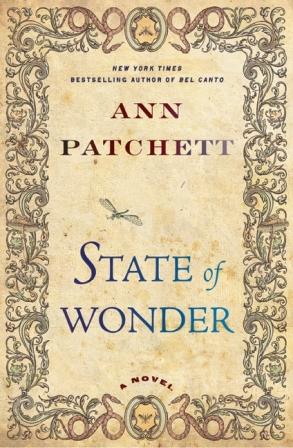
     State of Wonder by Anne Patchett describes the experiences of pharmacologist Marina Singh when getting to and living in the Amazon rain forest. After a colleague of Marina's named Anders Eckman dies there, Marina is sent by her boss and lover, Jim Fox, to both discover the exact cause of Eckman's death and oversee the progress of brilliant Dr. Annick Swenson, who is studying the indigenous Lakashi people so that a drug  permitting lifelong fertility in females can be forged. Singh's determination to discover how her colleague perished is intensified by a heart-wrenching plea from Karen Eckman, Anders' widow who is left with three mourning boys while she is still miserable herself, for information about the death. One found phenomenon unexpectedly turns out to be an alternative Dr. Marina Singh-the scant resources and dire situations that the Amazon present cause our main character to perform previously unthinkable actions. When an anaconda threatens to strangle her ever-lovable companion, a deaf boy named Easter, Marina suddenly finds enough courage to murder the great snake with a machete. Marina was once Dr. Swenson's gynecology student, but switched her major to pharmacology after performing a hasty cesarean (something I am so glad we didn't have to complete a lab about in biology) that blinded the baby she was delivering. When a Lakashi woman is in desperate need of a cesarean because her infant is (for lack of a better word) stuck, Marina finds herself forced by an incapable Dr. Swenson to actually conduct the necessitated procedure on a wooden floor with unsterilized equipment and shoehorns to hold open the uterus. When Dr. Fox actually comes into the Amazon to check on her, Marina doesn't tell him the imperative secret every doctor there is incubating: that Fox's investment is being used for, along with that fertility drug, the development of a malaria vaccine from which he will not fiscally benefit. Then it is discovered that Anders is really alive, which leads to Marina having sex with her former colleague on small cot.
     The Marina Singh who boarded that plane bound for the Amazon would never have executed any of the aforementioned actions. She loved Dr. Fox and therefore would never have desired to hurt his well-being. Karen Eckman was a morbid woman who reached out to Dr. Singh in a time of need, not a person whose spouse she would desire as a sexual partner. The bleak lab at Vogel Pharmaceutical company was her home, a place where discomforts meant tedious faculty meetings, not watching an anaconda strangle the life out of her friend. She had palpably turned into a butterfly somewhere along the way...
     All humans experience dramatic change-in-state's throughout their lives. It is imperative that after these changes transpire, we do not completely revert back to our previous state. What comes to the forefront of my mind when I think of this concept is the drastic change from childhood to adulthood-would I witness Barney singing on my television every twenty-four hours nowadays? Would I hold on to my parent's hand every time I cross the street now that I am a teenager? The reason behind this prohibition is that our previous states cannot support us as we attempt to fulfill our current potential for success. As arrogant a priss I was, there is no way I would be writing this post at the present time if I was yet to learn long division.
     Dr. Singh eventually returns to her Minnesota hometown with Anders and fondly watches her colleague's reunion with his family. It is then that Ms. Patchett composes an immensely vague sentence to culminate her narrative: "And Marina brought him back, and without a thought that anyone should see her, she told the driver to go on.(page 353)" I interpret this to mean that Marina brings the spirit of Anders and therefore the Amazon (the two are intertwined since she knows how that Amazonian endeavor started and ended because of him) back to her and uses them in forging her decision to once more be at the side of Dr. Swenson, who both predicted Marina's return and desired that Singh stay to work on the project with her. It is in the Amazon, not in Minnesota, that the new Marina can fulfill her potential to help develop the fertility drug and malaria vaccine. I cannot study records of a 1920s newspaper for my novel tomorrow if I spend all of the day at a day-care. Uomo di Speranza has switched from being raised by others to raising himself.
     So, my dear friends, insure that you do not crawl on the ground once you have turned from caterpillar to butterfly. You cannot be squashed by an unsuspecting foot if you are flying.

Wednesday, April 20, 2011

The Picture of Snooki Polizzi

There is a friend of mine who fervently holds two obsessions. One of them is drama-for the last several years, you can find her in the program of pretty much every play or musical produced by my school. The other, and the one that she most imposes on any literature-loving acquaintaince she possesses, is Oscar Wilde. I faintly heard of the man while reading The Guernsey Literary and Potatoe Peel Pie Society (a WONDERFUL book, by the way), what I heard being that he was a rather exquisite author indeed. There were many other books I desired to read, however, and I decided to save the name of this author and his works for a rainy day. But this was before two events transpired:
1. In English class, I was assigned to find a novel whose theme concerned the pertinence of how people viewed others.
2. I realized what a cool name "Dorian Grey" was.
Considering the aforementioned phenomena, I suddenly had to read the novel.
     Out of the deepest crevices of Mr. Wilde's mind comes painter Basil (which just happens to be my favorite seasoning-another reason to love this book!) Hallward, a man whose entire creative force has been possessed by a breathtakingly handsome lad named Dorian Gray. On a pleasant afternoon when he is passionately working on a portrait of Dorian, Basil tells his dear friend, Lord Henry Watton, of his almost unhealthy obsession with the young man. Lord Henry expresses his fascination with the phenomenon and is therefore extremely jubilant when Dorian himself drops by Basil's art studio in order to stand for Hallward's portrait just as he has been doing for the past several weeks.  However, fascination is not all that he expresses; Lord Henry is an ardent hedonist (person who believes that the goal of every action should be to obtain personal pleasure) who absolutely adores sharing the philosophy he maintains with others especially when the minds of those others are malleable enough to be twisted by hedonism's wayward, pleasure-driven ideas. Dorian unfortunately falls prey to the attractive naughtiness of the notions, by the culmination of the session being thoroughly convinced that "when one loses one's good looks, whatever they may be, one loses everything." Therefore, he prays in a fervor of self-pity that  instead of himself aging, the wears of time would show on the perfect face of Basil's portrait. And that, through the wonders of literature, they do...but not entirely. Blemishes caused by aging, you see, are not all that the mug on the canvas begins to portray as the years pass. Because of Dorian's adoption of the hedonist philosophy from Lord Henry, many selfish and perverse acts begin to inhabit his lifespan and poison it with their abhorrence. With each of these acts, each of these resistances against the righteousness of his consience, an imperfection reveals itself on Basil's work. An unpleasant curve of the lip, a wrinkle near the eye, a deformation of the posture-something that irrevocably alters the image of breathtaking youth and virginity that Basil initially depicted on that canvas. Dorian also posssesses the ability to actually witness his soul's gradual progression into the deepes seas of maliciousess since Basil gave him the piece. And the best aspect of it all? Even as he witnesses their devestating effect on his soul, Dorian does not cease performing his unrighteous executions. There is a bit of hesitation when he first discovers the portrait's true nature, but the sum of a few reassuring Lord Henry-isms and one awesome plot twist (I'll leave you to discover its indisputable awesomeness) secures Hedonisms mammoth and active role in Dorian's life. So the selfishness and crime continue, as does the decay...
     Right here, right now, writing this, I suddenly realize that there's a person in this world to whom this story, this experience, rather, would be invaluable. Can you guess the individual in question from the title of this post? Can you? Did you get it yet? I think you did-that's right, folks, our favorite chica from MTV's hit reality show, Jersey Shore....the ONE....the ONLY...SNOOKI! Can you hear me, Snookster? You should really read this book. I bet that you'll enjoy it so much that it will change the course of your utterly Jerseylicious life. Here's why:
     Any guy on the street knows that the exact case presented in Dorian Gray is completely impossible-every person must succumb to the eternal force of age as time endures. However, the notion of some individuals of the world being protected from the repurcussions of their actions by a species of personal shield is absolutely correct. Some people-ahem, Ms. Polizzi-can maintain their general acceptance, and in some cases their overwhelmingly desirable status, within society regardless of what unrighteous actions they may perform. This is because the repurcussions of those actions are outweighed by some other force of considerable strength that the individual in question possesses; this force can be the degree of one's social status, one's previous accomplishments, one's appearance, or most commonly (and most detrimentally as well) the entertainment of society with one's negative actions. Dorian's shield, for example, is his eternal youth and beauty despite the ages and any sinister actions he executes. But each of these contemporary indiciduals possess a "picture" alongside their shield, ones that can potentially harm their lives much more than that of Mr. Grey's . You see, each bad action performed by one in our world makes a permanent inprint on her soul. This imprint that will indisputably influence her life in a customarily negative mode at any time proceeding the time it was forged. Dorian has the fortunate capability of hiding his picture away in a remote recess of his house after placing a thick blanket over it; people in this world, however, do not have this luxery. Others in our reality will eventually storm into one's house, locate that portrait, tear any device used to alter their ultimate interpretation of it, and show the depiction with all of its waywardness and reputation-soiling power to the outside world. And the more you hide, the more there is to be discovered and the more fruits others sense will be obtained from discovery. If one is a member of the select few who find that their portrait's hiding place is utterly successful in guiling the general public, there is, fortunately, still an ordeal for him as well. Dorian continues to look at the portrait throughout his life, even at times when he doubts the thing's eventual use of its  reputation-destroying power. He still ventures up to that old schoolroom where the portrait is hidden and sits, staring at the phenomenon, for days on end. Every blemish, every sign of decay that causes him so pain...he inhales all of it through extended periods of wild self-torture. So that's right, Snooki-even if nobody cares that you got arrested when you eventually look for work in the however-distant future, the ghost of that action can haunt you until the day you perish. Next time, think twice before you decide to get wasted on a beach and oh-so-cordially scream "Get the f**k off me!" to a horde of policemen. You know, just a tip.
     What can those of us who are innocent do? Well, not supporting the shields of the aforementioned people would be an exquisite start. We can achieve this with the simple act of not talking about these people; Jersey Shore would not possess half of the fans it does if the show was not touched upon so frequently in both the  regular public conversation and the media. People should at least know about the show, but the constant drilling of its contents into their heads causes them to possess no choice except to indeed watch it. And the fact that the "establishment" is so rejecting of the program makes firebrand youths love it even more. Tuning in to see when DJ Pauly D and the Situation are up to each weak is a mode of expressing their discontent with the ardent conservatism around them. If you want to avoid a fire, don't exuberantly stress your prohibition of playing with matches.
     As for me, it's April Break Time! WOO-HOO!  Besides that wonderful plus, I am thoroughly enjoying the fact that two of my favorite foods in the world-jelly beans and matzoh-are in stores simultaneously at the present time. Yum! Oh, and that that reminds me-for those who celebrate it, have a wonderful Passover, and for some who don't celebrate it, have a Hoppy Easter! Picture the re-do of this sight as a matzoh-filled Easter Basket from me to ya'll...only one that you don't have to find. And speaking of springy things...
     What books do yoose guys plan to sink your teeth into before summer?

Saturday, December 4, 2010

Sliiiiice Up the Fruit Cake.....

Now, it is not my preference to read two books simultaneously-in some odd way it gives me the feeling that I am cheating on the novel that I initially began to read-but sometimes it is necessary when a friend begs me to read another book, or when the book I am reading is just not very attention-getting.  This, however, was not the case with the last week; about a month ago I had heard great things about this novel Marcelo in the Real World by Francisco X. Stork, a fairly new and not-very-well-known book that was a bit similar to Mark Haddon's bestseller The Curious Incident of the Dog in the Night-Time. I picked the novel up about a month ago and have been reading it through the duration of my tearing through of The Hunger Games, whose finale was so incredibly amazing (but that story is for the next post.) So even though I was ravaged with suspense after I read the premiere pages of Catching Fire last Sunday, a combination of Marcelo in the Real World getting extremely riveting and my not feeling very cheery about starting off the Christmas season with the sequel to a book about adolescents murdering each other caused me to read the remaining portion of Marcelo. And with no offense to Suzanne Collins...man, am I glad I did.
      Marcelo in the Real World is essentially a coming-of-age story, but a hell of a lot more-it is a superb mix of philosophy, deceit, and realization. Marcelo Sandoval is socially disabled, but not so much so that he can not effectively participate in the "real world." However, his attendance at a school for the disabled called Paterson has caused Marcelo to still be enveloped in an extended childhood where he spends most of his weekends in a tree house analyzing the IM, or the internal melodies that independently flow through his brain. Marcelo's "special interest", as he calls it, is religion-he can recount excerpts from the Bible by the word and spends a great amount of time reciting the Scripture in his head to make himself calm. Arturo, Marcelo's father, does not see the point of his son going to Paterson and would like him to attend public high school for his senior year, so he makes a deal with him: if Marcelo works at Arturo's law firm for the summer and follows all of the rules of the "real world" (I know I'm killing you with quotation marks, but just bear with me!), Marcelo can choose whether he will go to Paterson or Oak Ridge High for senior year. He takes the offer, and from then on is jerked out of his peaceful utopia and thrown haphazardly into the hopelessly clinical world of lawyers who all have the premonition that he is retarded. Through his experiences there like meeting the arrogant Wendell Holmes, working with a talented pianist named Jasmine, and discovering the phenomenon of sacrifice through a discarded picture of a girl with half a face, Marcelo realizes that the Real World is a place with horrors and atrocities but a place that also possesses magic of companionship and the vigor of challenge. In the end, Marcelo is faced with one chance to choose between worlds with suddenly much different aspects,  his faith dancing on the broken glass sprinkled around his decision.
      Some of the people who start this book may obtain the premonition that this is solely a book for the religious. Well, it is not. Whether you are Islamic, Hindu, Wiccan, Catholic, Jewish, Buddhist, Atheist, Unitarian, whatever, you will obtain something from this novel. At the denouement (one of my favorite words of all time) of the story, I reasoned that one of the main themes was that applying a world of both hope for the human race and of action ignited purely by my God's will into this harsh world around us is sometimes a seemingly hopeless challenge. And for those who believe in it, isn't Christmas truly about surmounting that challenge? At what other point in the year does the world set aside a time from its occasional selfishness and anger for the celebration of humane goodwill and the amazing outcomes that can come after centuries of hope? Not to mention it is the sole point in the year when you can go around the house singing "I'm Mister Heat Miser, I'm Mister Sun, (da-da-da-da) I'm Mister Green Christmas, I'm Mister Hundred-And-One" without being called a nutcase. I know that for many this holiday is just really a time to fling presents at each other and enjoy the antebellum before that fifty-thousand dollar credit card bill comes in the mail, but I hope people will eventually realize that the Christmas Season is a lot more than that. This is the only occasion when even though your life can be rolling around in a sewage pipe, you can say, "Hey, at least it's Christmas," and a smile will be on your face. It is the only occasion when you can be as cheerful as you want in public and not have everybody hate you because they are wallowing in self-pity. And it doesn't have to be Christmas, even-the entire holiday season has the same feel of goodwill and hope for a positive future that I have mentioned above. Yes, I do know that I sound like a character from one of those Christmas specials where all of the people look like clay, but what's wrong with that really? It's as I've said: at any other point in the year these specials would be treated as a laughing stock, but yet spectacularly through the holiday season we just can't get enough of them. These characters emulate the ultimate optimists, and this is the one time of the year where optomism reigns supreme. Is that a bad thing?     
     How will I be enjoying the beginning of this glorious Christmas Season, you might ask? Well, you can more than likely find me either tearing my way through Catching Fire, studying (I've got quite a few exams this week,) or maybe even sitting down on our ancient couch with a mug of hot chocolate watching the Harry Potter Weekend on ABC Family. If I feel like it I may just try to finish decorating our puny tree outside with sparkling red ornaments, but that probably won't happen because of today's failed attempt. What can I say? After half an hour of the frigidness numbing my fingers and my Dad's cumbersome classic rock blasting through the radio, I had had enough. I much rather prefer decorating the miniature Christmas tree in my own room as a way of spreading my cheer, even if it keeps falling over.